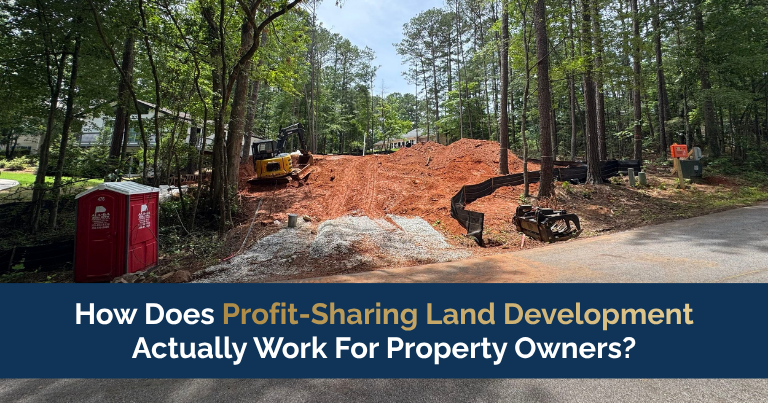
By understanding the mechanics of these agreements, you can make deeply informed decisions about your family wealth and financial future. Profit sharing means you retain a lasting financial interest in the completed community rather than walking away at the initial closing. This structure transforms a dormant physical asset into a highly active engine for reliable ongoing revenue over many decades. It is a proven strategy for families looking to secure their financial legacy and preserve purchasing power across multiple generations.
The builder assumes the responsibility of navigating municipal zoning laws, securing building permits, and hiring all physical construction crews internally. You do not have to manage daily logistics or worry about ordering building materials because the operating sponsor handles everything. This clear division of labor provides an excellent balance of complete financial visibility and true operational passivity for accredited professionals.
These strategic benefits make partnerships incredibly attractive for owners who do not need immediate cash and prefer long-term wealth generation.
Before entering a land development partnership, property owners must organize their foundational site documents to ensure a smooth evaluation process. Gathering precise site data proves you are an educated owner and allows builders to see the true physical potential of your acreage. You do not need to hire construction crews or clear trees to make your property significantly more attractive to potential operating partners.
Clearing any outstanding property liens guarantees a highly predictable legal transaction when it is time to formalize the partnership agreement. Taking these simple steps creates absolute certainty, which directly translates into much stronger financial terms and higher profit sharing percentages. Proper preparation protects your underlying asset and sets a highly professional tone for the entire multi-year construction relationship.
Consider a family owning twenty acres near a growing suburban job center evaluating their residential development opportunities today. If they decide to sell land to developer groups directly, they might receive three million dollars within sixty days. This provides immediate relief and a clean exit but completely eliminates their ability to profit from the homes built on their land.
Alternatively, they could structure a land development partnership with a trusted local builder who understands the specific neighborhood market. By contributing their twenty acres as equity, they secure ownership shares in the sixty new townhomes constructed on the site. While they must wait two years for construction to finish, they eventually receive a steady stream of monthly rental revenue. Over a ten-year period, this ongoing income far exceeds the value of the initial three-million-dollar cash offer.
This scenario clearly illustrates why understanding your personal timeline and generational goals is so important before signing any legal documents. There is no wrong answer, but seeing the actual financial projections helps clarify which specific path fits your lifestyle best.
In a professional Co-Venture land development, the operating sponsor acts as the active manager while the landowner remains a passive capital partner. The sponsor conducts rigorous site analysis, studies local housing demand, and manages all municipal permitting processes entirely internally. They take on the absolute fiduciary responsibility of executing the complex business plan and delivering the community flawlessly and safely.
As the landowner, your primary role is providing the foundational physical asset and trusting the execution capability of your partner. You receive regular progress updates and financial reports, ensuring you maintain complete visibility into the project lifecycle constantly. This structure protects your initial land contribution while giving you direct access to the world of professional residential construction.
Clear communication is the absolute cornerstone of any successful structured partnership involving raw land and new residential housing construction. The best operating sponsors provide detailed quarterly reports that track construction milestones, municipal approvals, and exact financial budget expenditures openly. This rigorous reporting structure ensures you are never left wondering about the status of your valuable family asset during the build.
Q. How does a land development partnership work for property owners?
Q. Why do owners choose profit sharing instead of deciding to sell land to developer groups?
Q. How do I identify strong residential development opportunities for my acreage?
Q. How do these partnerships create reliable passive income real estate investments?
By holding the completed homes as rentals, the partnership generates steady monthly revenue that is distributed to the landowners regularly.