
How to Generate High Returns in Multifamily Investing Uncovered

Home How to Generate High Returns in Multifamily Investing Uncovered Podcast · Nov 27, 2023 In this case we were invited by Jay Conner and shared a bit of our experience in this exciting Real Estate world. Also, discussed some interesting topics related to raising capital as well as underwriting vs reality and how we really need to anticipate pivotal decisions during our project executions, everything in order to generate high returns in multifamily investing. Check the episode here: How to Generate High Returns in Multifamily Investing Uncovered with Daniel Angel-Mejia and Jay Conner Previous PostManaging an International Multifamily TeamNext PostStructured Real Estate Investments with Daniel Angel-Mejia
Managing an International Multifamily Team

Home Managing an International Multifamily Team Podcast · November 14, 2023 In this episode, Daniel talks about the importance of partnership compatibilities, his transition from residential to commercial investing, Apex Investment’s focus, the dynamics of the project management team, the challenges of building a functional team, the significance of managing company culture, and much more. Check the episode here: Managing an International Multifamily Team with Daniel Angel-Mejia, Ep. 556 Previous PostFrom Ground Zero to $50 MillionNext PostHow to Generate High Returns in Multifamily Investing Uncovered
Developing Value-Add Renovations and Operational Efficiency
Home Developing Value-Add Renovations and Operational Efficiency Blog · November 14, 2023 Renovation is a key concept in real estate investment, especially for multifamily properties. Value-Add renovations involve making strategic modifications to units to align with market expectations, within specific budget and scope limitations. Renovations do not typically include extensive structural changes, but rather careful planning of smaller, yet significant, alterations. When delving into the process of renovation, a wide range of activities takes center stage. From the repainting of cabinets to the replacement of faucets, door handles, and appliances, every detail is carefully considered to uplift the overall look and feel of the property. Multifamily value-add investments, powered by renovations, generate a wide range of benefits. Not only increase rental income, but also boots the overall value of their property. Moreover, a well-executed renovation can create a sense of community pride, fostering a positive environment that cultivates long-term tenant satisfaction and retention, and can also help to reduce maintenance costs and extend the lifespan of the property. Choosing the Right Approach for Your Multifamily Property: Renovations vs Refurbishments Understanding the difference between renovation and refurbishment is crucial. While the notion of renovation predominantly turns around transforming spaces, elevating them to their full potential, the core of refurbishment lies in substantial structural modifications, as explained before, a renovation does not include significant alterations of the unit, such us a modification of the structure that would apply to refurbishment which in other words entails significant repairs, including pivotal movements such as the displacement of walls, reconfiguration of plumbing systems, and other intricate structural alterations. From an economic perspective, the magnitude of refurbishment translates to a notably higher cost compared to renovation, consequently presenting distinctive scopes of work for each process. Therefore, a unit that undergoes renovation generally costs much less in the market, highlighting the clear difference between these two approaches in the real estate world. This can also be seen in the investment strategies of value-add and opportunistic. While value-add method primarily focusses on strategic renovations aimed at enhancing the appeal and functionality of properties, the opportunistic approach delves into more substantial structural modifications, aligning closely with the concept of refurbishment. With value-add investments, the emphasis lies on cost-effective upgrades and targeted enhancements that elevate the overall market appeal of the property, thereby increasing its competitive edge. In contrast, opportunistic investments entail significant repairs and comprehensive structural alterations, often resulting in a higher investment cost due to the magnitude of the refurbishment process. Multifamily Value-Add Renovations: A Strategic Approach to Maximizing ROI Maximizing return on investment (ROI) through value-add renovations in multifamily properties requires a strategic approach that carefully considers cost-effective upgrades to enhance the property’s appeal and competitiveness in the current market. This involves understanding the target tenant demographics, identifying their preferences, and implementing improvements that tailor to their needs and aspirations. One of the most effective ways to increase the value of a multifamily property is by renovating individual units. In addition to unit renovations, the renovation team can also add value to a multifamily property by upgrading common areas and amenities, such as landscaping, fitness centers, pool area and outdoor living spaces. These desirable amenities can increase tenant satisfaction, leading to longer tenant retention and reduced turnover costs, which can boost investor returns. When implementing value-add renovations, it is important to be aware of two main factors: overcapitalization and budget overruns. Overcapitalization occurs when the cost of renovations exceeds the value added to the property, which can fade away ROI and make it difficult to exit the investment profitably, in other words, spending more on renovations than the property is worth can hurt your bottom line and make it harder to walk away from the investment. On the other hand, it is important to be conscious of the cost of renovations as it might lead to budget overruns and financial strain. That is why, it is therefore important to obtain accurate estimates from qualified contractors and to factor in contingency costs. Apex´s value-add strategy. At Apex, our commitment lies in amplifying the value of our assets through a comprehensive approach that encompasses the revitalization of both interior and exterior spaces, striving to deliver a product that aligns seamlessly with the ever-evolving demands of the market. Moreover, our dedication extends beyond the confines of indoor spaces, as we actively enhance the communal areas, fostering an enriched living experience for our tenants. To achieve this, we have assembled a dedicated and skilled team that collaborates closely with reliable contractors to ensure the delivery of a superior-quality product. Here at Apex, we make it a priority to collaborate with experienced companies and contractors that have a strong history in this field to ensure that all the construction work runs smoothly and efficiently. Renovations team on the field At Apex, we understand that the success of any multifamily renovation project depends on careful planning, coordination, and execution. That’s why we have two dedicated departments responsible for carrying out all operations and logistics related to the renovation plan for each property. The first department is responsible for everything related to supply chain and budgeting; the second department is responsible for everything related to coordination and execution of the renovation plan, product control, schedule, and budget. In general, for each project/property, we define a plan that allows us to calculate quantities and negotiate with our suppliers, seeking for efficiencies in logistics and budget. Also, we have also successfully established a subcontractor loyalty plan that ensures that our subcontractors execute our projects according to our quality and efficiency standards. During the operation of the asset, after the acquisition, the renovation team works very closely with the Asset Management department and the property management company to be harmoniously coordinated for the correct execution of the renovation plan. Here, our role is essential to ensure that we are meeting the product standards, regulations, and defined budget as the success of the project depends on it. At APEX, we have a strong commitment to quality and
Real Estate Investment Strategies: The Power of Value-Add
Home Real Estate Investment Strategies: The Power of Value-Add Blog · October 30, 2023 In the world of real estate investment, different strategies serve various investor goals and risk preferences, ranging from safer income-generating approaches to more aggressive tactics targeting higher returns. Four key real estate investment strategies, namely core plus, core, value add, and opportunistic, represent different levels of risk and potential returns. Understanding these strategies is essential for making informed investment decisions. Here is a brief overview of the four main investment strategies: Core: This strategy involves investing in stable, income-generating properties with low risk. These properties typically have long-term leases and require minimal operational intervention. Core Plus: Core plus investments encompass properties that have a stable income but may have some opportunities for improvement or increased cash flow. They usually involve moderate risk, slightly higher than core investments. Value Add: Value-add strategies involve acquiring properties that require improvements or restructuring to increase their value. These investments often involve renovations, rebranding, or operational enhancements to boost the property’s income potential. Opportunistic: This high-risk, high-reward strategy involves investments in properties that require significant improvement, repositioning, or redevelopment. These properties often come with high vacancy rates or substantial rehabilitation needs and require active management and a strategic exit plan to realize their full potential. Each strategy can be applied considering various variables in different projects, and it is the role of the project developer or structurer to intelligently and assertively define which strategy should be applied. Similarly, each investor can also adapt to each strategy according to their expectations. Therefore, it is important to have a better understanding of each one, with the aim of having sufficient information to make assertive decisions. Investing in real estate requires a deep understanding of the different investment strategies, each with its own risk-reward profile. For example, core plus and core investments imply acquiring properties with lighter renovations or those with relatively higher occupancy rates, prioritizing stable cash flows, assuming minimal intervention for steady operations. While these strategies offer stability, they may lack the dynamic leverage necessary for significant value creation. Also, value-add and opportunistic strategies require more professionalism due to the renovations team’s expertise and experience in managing complex projects, ensuring timely completion and cost-effectiveness. Here is where we find the value-add strategy as our perfect match. By actively engaging in property renovations and enhancements, the renovations team embraces the inherent challenge of improving properties to unlock their full income-generating potential. Recognizing the correlation between visible upgrades and increased rental value, we leverage our expertise in renovations and believe in the direct impact of tangible improvements on the overall net operating income (NOI) of the property. Apex’s projects team on the value-add strategy. From the beginning, Apex’s projects team demonstrates a proactive and comprehensive approach to the value-add strategy, making a significant impact on the success of their real estate approach. Their involvement begins before property acquisition, as they engage in meticulous due diligence assessing each property’s current state and crafting a strategic roadmap for transformation, which will eventually lead to rent bumps and higher NOIs. With a steady commitment to precision and efficiency, the team meticulously formulates budgets, schedules, and a scope of work, ensuring a continuous execution of plan upon Apex’s ownership of the asset. If you’re seeking guidance on legally exiting your timeshare, you might find valuable insights at “https://canceltimesharegeek.com/how-can-i-get-out-of-my-timeshare-legally/“. The projects team, consisting of two specialized departments, handles the important tasks for the value-add renovation process. One team focuses on managing the supply chain and budgeting, while the other takes charge of coordinating and executing renovation plans, making sure everything stays on track with product control, schedules, and costs. They focus on both the outside and inside of the property, starting with improvements to the exterior, strategically designed to enhance the property’s visual appeal and create a favorable impression on potential tenants, and simultaneously upgrading the interior, with particular emphasis on the refurbishment of bathrooms and kitchens to elevate the property’s overall market appeal. Their aim is to make the property more attractive to potential tenants. Showing their strong dedication to doing great work, the projects team focuses on understanding their products deeply, sticking to their plans, and promoting strong communication and leadership within their team. Their ability to quickly make smart decisions and solve problems highlights their commitment to smooth project management. Moreover, their focus on building friendly and professional relationships with everyone involved in the process reflects their dedication to create a collaborative and supportive project environment, ensuring a smooth journey towards real estate improvement and growth. In the realm of real estate investment, the diversity of strategies highlights the importance of understanding the nuanced relationship between risk and return. While various investment strategies accommodate different risk appetites and financial goals, the value-add strategy emerges as a compelling avenue for unlocking the unexploited potential of properties. In the perspective of Apex’s projects team, careful planning, smooth execution, and building good relationships are crucial for making the value-add strategy work well. By focusing on making real improvements, their approach blends smart planning and great work in the ever-changing real estate world. Value-add investment strategies provide investors with new growth opportunities and potential maximized returns on their real estate investments. Videoclip: Each unit is like a project for us, and that’s why we have established an efficient process that allows us to define a specific scope of work and budget for each unit, seeking efficiencies in time and costs, for the success in the execution of CAPEX of our projects. We focus on building a friendly and professional relationship with everyone involved in the process, reflecting our dedication to create a collaborative and supportive project environment, ensuring a smooth journey towards real estate improvement and growth. Previous PostMastering Real Estate Property ManagementNext PostDeveloping Value-Add Renovations and Operational Efficiency
From Ground Zero to $50 Million

Home From Ground Zero to $50 Million Podcast · October 27, 2023 In this episode, we engaged in an insightful discussion on Best Ever CRE with Slocomb Reed, during which Daniel delved into the shifting landscape of value-add multifamily investments and highlighted the evolving investor sentiment and the challenges of finding high-return deals in today’s market, his experience and kwnoledge leaded him and his team to get from ground zero to $50 million. Take a listen to the episode here: Daniel Angel – From Ground Zero to $50 Million Previous PostHow Daniel Seized the Opportunity and Moved to Multifamily InvestingNext PostManaging an International Multifamily Team
Mastering Real Estate Property Management

Home Mastering Real Estate Property Management Blog · October 23, 2023 Real estate property management is a multifaceted discipline that requires a combination of knowledge, skills, and effective strategies. Whether it’s attracting and retaining tenants or ensuring proper maintenance, mastering property management is essential to maximize performance and maintain the value of real estate investments. In this article, we will explore some best practices and essential strategies for mastering it. Asset management is a crucial aspect of real estate investing, as it oversees the day-to-day operations. A property manager acts as the bridge between property owners and tenants, ensuring smooth operations and maximizing the property’s performance. Here are some aspects to be considered: Tenant Retention One of the key factors in successful property management is tenant retention. Happy and satisfied tenants are more likely to stay longer, reducing turnover costs and ensuring a steady rental income. Here are some tips to enhance tenant retention: Provide exceptional customer service and respond promptly to tenant inquiries and concerns. Establish clear communication channels and maintain regular contact with tenants. Offer incentives for lease renewals, such as rental discounts or upgrades. Create a comfortable living environment by addressing maintenance issues promptly and ensuring a well-maintained property. Foster a sense of community through social events or shared amenities. Effective Maintenance Proper maintenance is essential for preserving the condition of the property and ensuring tenant satisfaction. Follow these best practices for effective property maintenance: Develop a proactive maintenance plan and schedule regular inspections. Respond promptly to maintenance requests and resolve issues efficiently. Ensure quality repairs and services by working with reputable contractors and vendors. Conduct preventive maintenance to identify and address potential problems before they escalate. Keep detailed records of maintenance activities, including dates, costs, and outcomes. Mastering real estate property management is a continuous learning process that requires attention to detail, effective communication, and a proactive approach. By focusing on tenant retention, implementing effective maintenance practices you can optimize the performance of your real estate investments and create a positive experience for both tenants and property owners. Remember, successful property management ultimately leads to long-term profitability and the preservation of your real estate portfolio’s value. Good Communication Property managers play a key role in facilitating clear and efficient communication between property owners and tenants. They serve as a primary point of contact for tenants, addressing their inquiries, concerns, and requests in a timely manner. Here are some key factors to improve overall tenant experience: Responding promptly to inquiries, requests, and concerns helps build trust and shows tenants that their needs are valued. Effective communication involves using clear and concise language to ensure that messages are easily understood. Property managers should avoid jargon and technical terms, especially when communicating with tenants who may not have a background in real estate. Proactive Notifications: Property managers should proactively communicate important information to tenants, such as upcoming maintenance work, policy changes, or community events. Creating a Sense of Community Is essential for a property manager because it enhances tenant satisfaction, fosters a positive living environment, and contributes to the overall success of the property. Here are some of the best practices to do: Community Events: Organize community events and activities to encourage tenant interaction and foster a sense of belonging. This can include holiday celebrations, barbecues, fitness classes, or workshops. Amenities and Shared Spaces: Design and maintain common areas and amenities that promote community engagement. Well-maintained and inviting spaces encourage tenants to interact and build a sense of community. Communication Platforms: Implement communication platforms or online forums where tenants can connect, share information, and engage with one another. Encouraging tenants to share their experiences, recommendations, and ideas helps foster a sense of community and encourages interaction. Volunteer Opportunities: Provide opportunities for tenants to get involved in community initiatives or volunteer programs. Involving tenants in meaningful activities strengthens the sense of community and promotes a shared commitment to the property. How does Apex manage Property Management and what is its approach? At Apex, we use a third-party property management approach. In our particular case, the company we work with shares a very similar structure and strategy to what we do at APEX in which their corporate and admin structure is runed from Latin America and their on-side presence is focused on positions that are required to have direct contact with the asset, such as Community managers, leasing assistance and maintenance teams. From Daniel Gonzalez, managing partner and leader of Asset Management. Apex property management approach provides a competitive advantage to overall operation. Our approach and structure provide a competitive advantage to our firm, given that we are able to run the properties in a more hands on approach. The regular and traditional property management approach allocates too many tasks and responsibilities on a few team members, while our approach allows for specialization of team members and each of the core areas within the property management operation.In conclusion, successful property management requires a combination of organizational, communication, and problem-solving skills. Property managers play a vital role in maximizing the property’s revenue potential, minimizing vacancies, and ensuring a positive experience for both property owners and tenants. By efficiently managing the day-to-day operations, property managers contribute to the long-term success and profitability of the investment. Previous PostHow Daniel Seized the Opportunity and Moved to Multifamily InvestingNext PostFrom Ground Zero to $50 Million
How Daniel Seized the Opportunity and Moved to Multifamily Investing
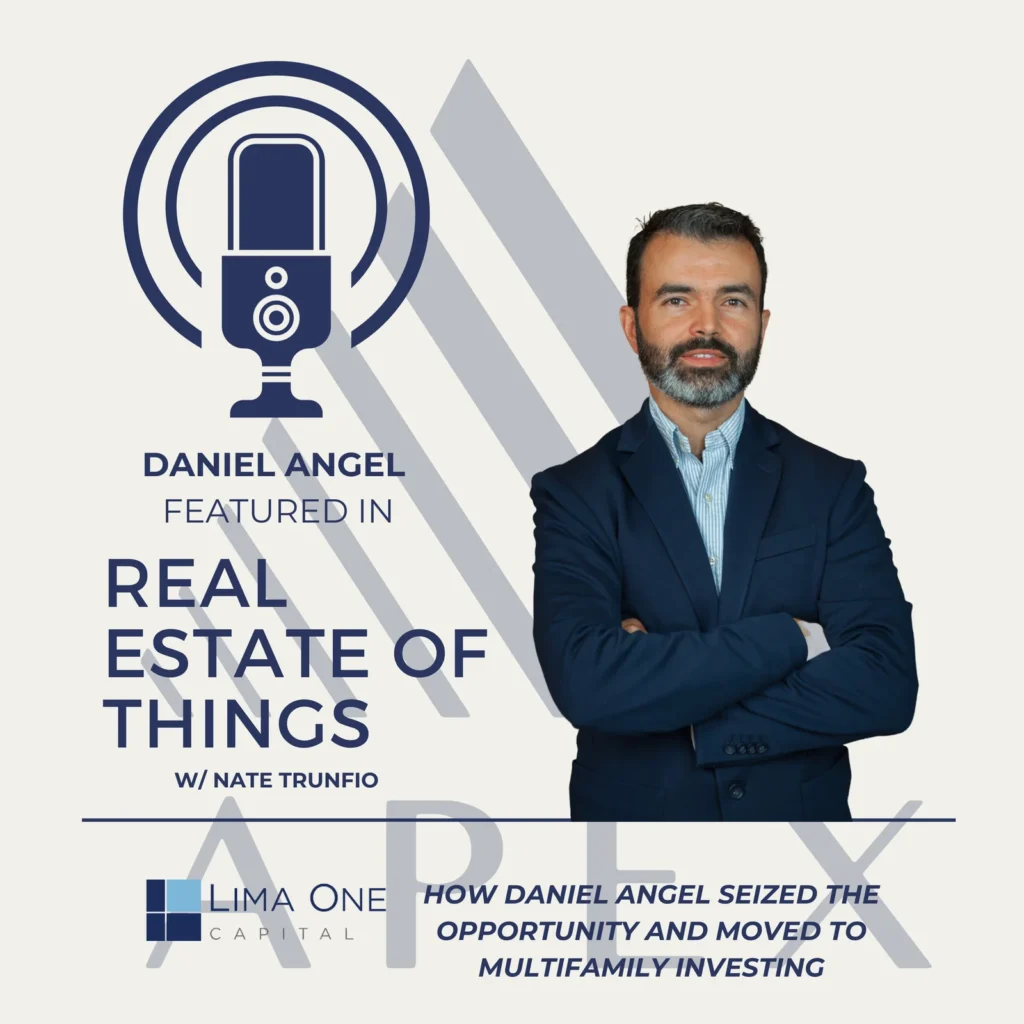
Home How Daniel Seized the Opportunity and Moved to Multifamily Investing Podcast · October 11, 2023 In this podcast episode, we had a great conversation on The Real Estate of Things from Lima One Capital once more where Daniel shares his journey from fix and flip into multifamily real estate and the lessons he’s learned along the way. It’s always wonderful to delve into our narrative and engage in insightful dialogues with fellow industry experts. Go check the episode out: How Daniel Angel Seized the Opportunity and Moved to Multifamily Investing Previous PostAtlanta Multifamily ApartmentsNext PostFrom Ground Zero to $50 Million
Atlanta Multifamily Apartments
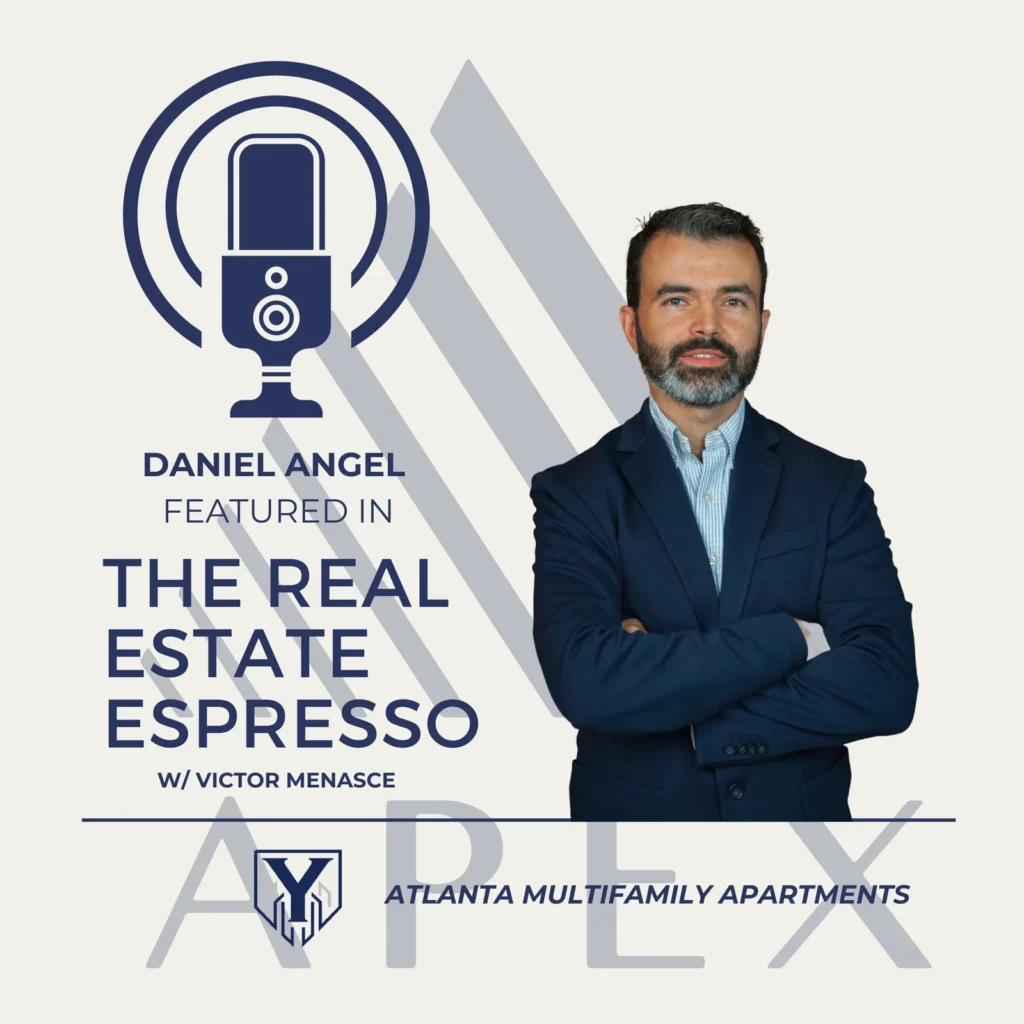
Home Atlanta Multifamily Apartments Podcast · October 6, 2023 This time we had a great conversation on The Real Estate Espresso Podcast with Victor Menasce and Y Street Capital, discussing why Atlanta Multifamily Apartments, the state of the market and how to navigate the current headwinds. It’s always great to share our story and have great conversations with our colleagues. Go check this episode out: Atlanta MultiFamily Apartments with Daniel Angel Previous PostWhen Moving Up to Multifamily Makes SenseNext PostHow Daniel Seized the Opportunity and Moved to Multifamily Investing
Why is the Fed Raising Interest Rates?

Home Why is the Fed Raising Interest Rates? Blog · October 2, 2023 Inflationary Pressures and the Rising Rate Cycle In 2022, the FED began raising interest rates in response to rising inflation. This rate-hiking cycle has continued into Q3 2023 and is expected to continue at least until the end of 2023. In this article, we will briefly analyze the factors that contributed to inflation reaching its highest level in 40 years and how this led to the current interest rate hike cycle. Source: Newyorkfed.org Inflation Inflation is a general increase in prices and a decrease in the purchasing power of money, think of inflation as a generalized increase in prices of goods and services. Inflation can also be a product of scarcity if a product that is in high demand suddenly starts to be unavailable, then the price will rise rapidly. If this product is vital for a sound economy, this scarcity will lead to it. It can be caused by several factors, including: Increased demand: When demand for goods and services exceeds supply, businesses can raise prices. Decreased supply: When the supply of goods and services is disrupted, businesses may raise prices to compensate. Cost-push inflation: When the cost of producing goods and services increases, businesses may pass on these costs to consumers in the form of higher prices. The main factor that drives the tendency of interest rates is inflation. In an organized economy, this increase usually follows a long cycle of low interest rates, higher than expected economic growth, and a high volume of money being injected into the economy via investment or government incentives. All the aforementioned factors lead to more money in circulation in the economy. If businesses and homes have more cash in hand, they will increase their demand for services and goods which will lead producers to set their prices higher. What was the behavior during the past pandemic? The COVID-19 pandemic caused a sudden halt to business activities in the first half of 2020. Global mandatory quarantines forced all but essential businesses to close, leading to widespread bankruptcies, layoffs, and shortages of several goods and services. As a result, people and businesses clinched to their available cash and significantly decreased their consumption, investments and put a stop on their growth plans. A prolonged decline in goods and services would have put the US economy in a hard place.To incentivize consumption, the US government created multiple aid programs for businesses and individuals designed to get cash circulating into the economy, including loans with interest rates close to zero, payroll subsidies, tax deductions, and government checks. At the same time, the FED was drastically reducing interest rates until they reached levels that were close to zero. This exponential diminish cycle was later known as “free money”.After vaccines became widely available and quarantine ended, most of the world quickly returned to normal, businesses reopened, and the panic went away. Nevertheless, the economy was already flooded with cash. After that, the tables turned, and the large amount of cash in circulation led to the highest inflation the US has seen in 40 years.As it is widely known, the FED’s main role is to keep inflation under 2%, and in June 2022 it reached 9.06%. As a result, the goal was to get inflation back to its target level so the way to achieve this was via interest rate. Since then, the Fed initiated a rate hike cycle that is likely to continue as of September 2023. In fact, the Effective Federal Funds rate has gone from 0.25% to 5.25%, the steepest increase since the Volcker Shock in the 1980s.As of August 2023, data revealed that core inflation sits at 4.35%. Even though it has drastically decreased from 9.06%, it is still more than double the target inflation of 2%. FED’s chair, Jerome Powell, has hinted that the interest rate hike cycle will keep on going until there is convincing evidence that the 2% goal will be achieved. It is important to note that raising interest rates can have a negative impact on the economy. Higher interest rates can make it more expensive for businesses to borrow money and invest, and it can also make it more expensive for consumers to borrow money to buy homes and vehicles. However, the FED believes that raising interest rates is necessary in order to control inflation and protect the long-term health of the US economy.To summarize, the COVID-19 pandemic had a significant impact on inflation and monetary policy. Government stimulus programs and the Fed’s low interest rates led to a large increase in the money supply. When the pandemic subsided and businesses reopened, this influx of cash fueled a surge in inflation. The Fed is now raising interest rates to bring inflation back down to its target level of 2%. The Relationship Between Inflation and real estate The Fed has been raising interest rates aggressively in an effort to bring inflation back to its target level. The Fed has raised interest rates four times in 2023, with the most recent hike being a 25 basis points increase in July. The rising rate cycle is having a significant impact on the real estate market as higher interest rates make it more expensive to borrow money to buy a property. This is leading to a decrease in demand for homes and a slowdown in the housing market with a notorious impact on inventory levels and absorption rates.The Fed’s rate hikes are also having an impact on home prices. Home prices have been rising rapidly in recent years, but the pace of growth is starting to moderate. This is due, in part, to the higher interest rates, which are making it more expensive for buyers. The real estate market is likely to remain under pressure for the foreseeable future as the Fed continues to raise interest rates. However, the long-term impact of the rising rate cycle on the real estate market is still uncertain.At Apex, as a real estate investment
Acquisitions Department, the engine of the company’s growth
In the real estate world, the acquisitions department plays an essential role in identifying and acquiring properties with investment potential. This process is carried out with both a financial and market focus, seeking to maximize returns and minimize risks. The department is responsible for assessing all macroeconomic and exogenous variables that may affect the property’s cash flow, such as rent growth, expense growth, tax changes, and other factors. This includes understanding the potential for rent bumps, which is the ability to increase rent through renovations to a higher, but still reasonable, level given market conditions. This is one of the most important variables, as we operate on value-add projects. Step-by-step lead generation The process begins with the generation of leads, which are property offerings that come to the department from different brokers. Each lead is subjected to a preliminary evaluation to ensure that it meets certain criteria, such as: location, property type, value, submarket demographics, vintage, number of units, and value per door (guidance), among others. Preliminary quantitative and qualitative analysis Upon passing the preliminary review, the broker will be asked to provide additional information about the lead. This includes data such as the T12, which is the property’s financial performance over the past 12 months; the rent roll, which provides more specific property information, such as the occupancy rate, rent value, and unit type; and an offering memorandum or OM, which provides a more detailed overview of the property, including its main features, photos of both the interior and exterior, and market or submarket specifics. Once this information is obtained, along with a financial evaluation of the property’s preliminary financial statements, in which revenue, costs, and potential opportunities to improve cost efficiency are analyzed, it is determined whether the property is suitable to continue with the process and whether the market characteristics align with our investment thesis. Underwriting – In-depth assessment After the preliminary analysis, the remaining properties undergo a more in-depth evaluation, where variables such as rental rate (the ratio of rental income to the current sales price), ROI (return on investment), type of renovation required, and target sales price are analyzed. In the real estate industry, properties that pass the initial screening are moved to the underwriting phase. During this phase, macroeconomic and microeconomic factors, as well as financing and budgeting considerations, are thoroughly examined to determine the investment’s feasibility. A property tour is also conducted to inspect the property’s physical condition, conduct interviews with the real estate agent and property managers, and gather additional information that may influence the decision-making process. LOI Committee and Due Diligence After the tour, the acquisition team meets to scrutinize the data and identify comparable properties in the market that support the investment. The acquisition team’s findings provide the basis for drafting a Letter of Intent (LOI). The LOI is submitted to the broker, and if accepted, the “Highest and Best” phase begins, during which updated financial documentation is exchanged. If the offer is attractive to both parties, the due diligence process begins, where both the construction team and the asset management team review each aspect of the property in detail to ensure that the business is profitable and viable. Finally, a purchase and sale agreement or PSA is signed, finalizing the acquisition of the property. Once the transaction is complete, work on managing and improving the property continues, while the acquisition department begins the process anew, analyzing leads and reviewing all underwritings to continue the company’s growth in number of assets under management. Relationship between Capital Markets and Acquisitions Department at Apex A close relationship between Apex’s Capital Markets department and Acquisitions team is essential for success. These two areas collaborate synergistically, sharing information, knowledge, and strategies to maximize investment potential and minimize associated risks. This partnership is not only valuable, but also critical for making informed and sound decisions in the complex world of real estate. Market conditions The collaboration begins with a joint analysis of the current market conditions, which will serve as input for the acquisitions team’s models. The Capital Markets team provides insights into current financing conditions, including variables such as interest rates, institutional investor risk appetite, inflation, and employment. Optimal leveraging Determining the maximum level of leverage possible is a critical factor in the evaluation of an acquisition. The Capital Markets team identifies how much debt is prudent to assume based on market conditions and investment objectives. This figure becomes a fundamental component for structuring the offers made by the Acquisitions team. LOI and Private Equity One of the most significant aspects that connects both areas is the private equity fundraising process. The information generated during the Letter of Intent (LOI) committee process is the basis for attracting institutional investors and soliciting their feedback. The Capital Markets team plays a vital role in this process by establishing relationships with potential investors, presenting the investment opportunity, and managing the financial discussions that can lead to the acquisition of private equity in a project. This collaboration is essential, as the ability to perform underwriting does not guarantee success if both the debt and equity necessary cannot be secured. Feedback and review This collaboration is not only based on sharing information, but also on receiving feedback. The Acquisitions team uses the knowledge and insights of Capital Markets to refine their strategies and make informed decisions. Discussions between both teams often lead to adjustments in financial structuring and investment selection, ensuring that each acquisition is backed by a sound strategy and adequate financing. In summary, the close and collaborative relationship between capital markets and acquisitions department in the real estate market is essential for identifying, evaluating, and successfully acquiring properties with investment potential. This partnership strengthens decision-making, optimizes financial structure, and maximizes investment opportunities, ensuring that each acquisition is a key piece in the puzzle of business success.